

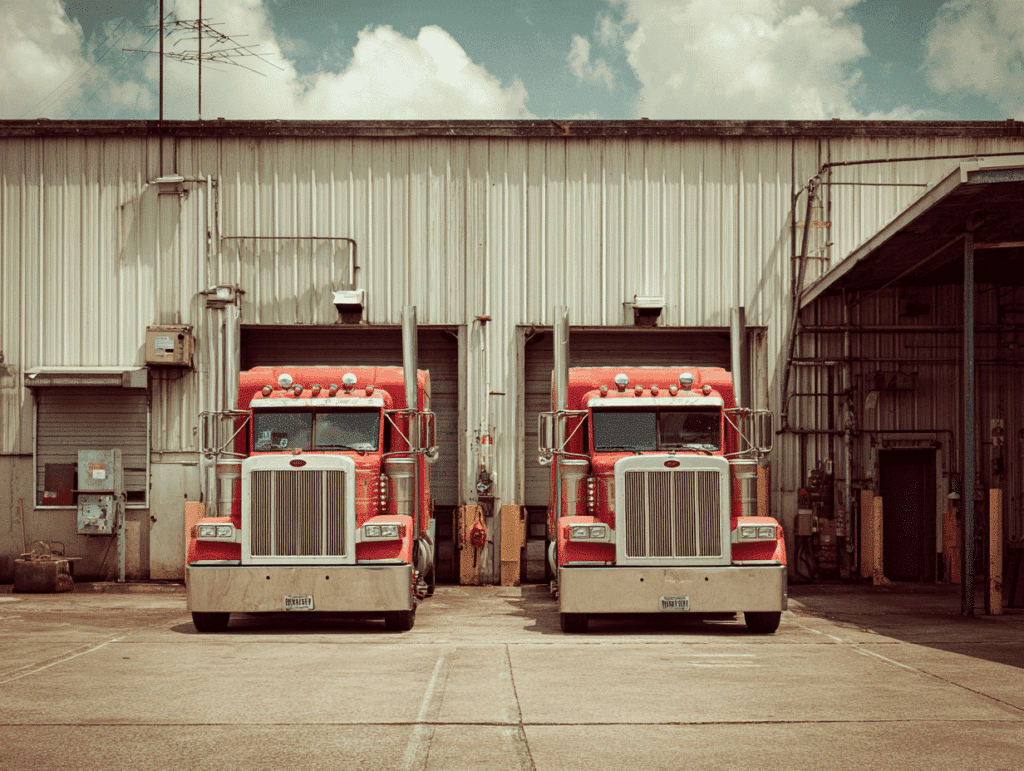
Add in factors like Houston’s congested highways, the Port of Houston’s constant freight traffic, and the hundreds of trucks moving through the city daily, and the risk becomes clear.
Let's Go Beyond, to Bring You Back
Let's get you the compensation you're entitled to. Get a FREE Consultation today.
Let's Go Beyond, to Bring You Back
You deserve the compensation you’re entitled to, call for your FREE Case Review today.
Rollover Accidents
A rollover occurs when a truck tips onto its side or roof. Given that commercial trucks sit much higher off the ground than passenger vehicles, their elevated center of gravity makes them particularly vulnerable to rolling over during sharp turns, sudden maneuvers, or when traveling at unsafe speeds.
Driver error plays a significant role in these crashes. Taking a curve too fast, overcorrecting during a lane change, or swerving to avoid an obstacle can all trigger a rollover. Cargo issues matter too. An improperly loaded trailer or shifting freight can destabilize the entire vehicle, especially during turns. Tire blowouts are another common culprit, causing drivers to lose control.
Nearly half of all large truck occupant deaths happen in rollover crashes. But truck drivers aren’t the only ones at risk. When a massive trailer tips over, it can crush adjacent vehicles, block multiple lanes of traffic, and cause chain-reaction collisions. Victims in these accidents often suffer traumatic brain injuries, spinal cord damage, broken bones, and internal organ injuries.
Liability in rollover cases may extend beyond the driver. Trucking companies that fail to properly train operators, cargo loaders who don’t secure freight correctly, and maintenance providers who ignore worn tires can all share responsibility.
Jackknife Accidents
Picture a semi-truck folding in on itself like a pocket knife closing. That’s a jackknife accident. The trailer swings out at a severe angle from the cab, often spanning multiple lanes and creating an immediate hazard for everyone nearby.
These crashes typically stem from braking problems. When a driver slams on the brakes too hard or when brake systems aren’t properly maintained, the trailer wheels can lock up while the cab keeps moving forward. The trailer then swings wide, blocking traffic and frequently causing multi-vehicle pileups.
Weather conditions amplify the risk. Wet or icy roads reduce traction, making it easier for trailers to slide out of control. Empty or lightly loaded trailers are especially prone to jackknifing because they lack the weight needed for stability during emergency stops.
Recent data shows that more than 1,800 fatal jackknife accidents occur annually across the country. When you factor in the countless non-fatal crashes, it becomes clear these incidents pose a serious threat to Texas highways like I-10, I-45, and the 610 Loop.
Prevention requires proper driver training, regular brake maintenance, and careful speed management. Truckers must understand how their loaded or empty trailers will behave during different road conditions. When these precautions aren’t taken, and a jackknife crash occurs, injured parties may have grounds for legal action against the driver, trucking company, or maintenance provider.
Related Article(s)
Wrongful Death in Truck Accidents: What Texas Families Need to Know
Who Is Liable in a Truck Accident? Understanding Responsibility & Negligence
Underride and Override Accidents
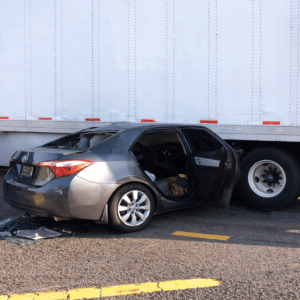 An underride collision happens when a smaller vehicle slides underneath a truck or trailer. The height difference between vehicles means the car’s hood and windshield strike the truck’s undercarriage, often shearing off the passenger compartment roof. Override accidents are the opposite: a truck rides up and over a smaller vehicle during a collision.
Federal safety regulations require trailers to have rear underride guards, but these protections often fail. Studies show that many guards meeting current standards still allow deadly underride to occur, particularly in offset impacts where the car doesn’t strike the center of the trailer. Side and front underride guards aren’t federally mandated at all, leaving massive gaps in protection.
The statistics are sobering. An estimated 400 people die in underride crashes each year, though the true number is likely higher due to underreporting.
When an underride happens, standard safety features like airbags may not deploy because the impact point is above the vehicle’s crumple zones. Victims often sustain fatal head and neck injuries.
These crashes can occur when trucks make sudden stops, back up without proper visibility, or jackknife across traffic lanes. Rear-end collisions are particularly dangerous when the truck is the vehicle being struck from behind by a car.
Advocacy groups have pushed for stronger underride protection standards for years. Until more comprehensive regulations take effect, the risk remains substantial for Houston drivers sharing the road with commercial trucks on highways where speed limits reach 65 mph or higher.
Truck Accident Attorney
Get Compensated For Your Injuries & Damages! Call Us For A FREE Case Review And Know What Your Case Is Worth.
Head-On and Rear-End Collisions
Head-on collisions between trucks and passenger vehicles are among the deadliest crash types. When two vehicles traveling in opposite directions collide, the combined force of impact is devastating. For a car striking a fully loaded semi head-on, the force differential is enormous.
These crashes often happen when truck drivers drift into oncoming lanes due to fatigue, distraction, or impairment. Failing to observe right-of-way at intersections, running red lights, or crossing the center line on two-lane highways can all lead to head-on impacts. On busy Houston-area roads where drivers face long commutes and heavy traffic, a moment of inattention can have fatal consequences.
Rear-end collisions involving trucks are surprisingly common. Loaded tractor-trailers require 20% to 40% more stopping distance than passenger cars, and that gap increases on wet pavement or with poorly maintained brakes. When truck drivers follow too closely, drive while distracted, or exceed safe speeds for conditions, they may not be able to stop in time.
The sheer weight of a commercial truck means that when it rear-ends a smaller vehicle, the passenger car often suffers catastrophic damage. Occupants can be crushed, and the force may push the vehicle into other traffic. Conversely, when a car rear-ends a stopped or slow-moving truck, underride becomes a serious risk.
Texas highways like I-10 in Harris County see heavy truck traffic daily. During rush hour congestion, construction zones, and stop-and-go traffic, the risk of rear-end collisions increases. Determining fault requires examining driver logs, maintenance records, and whether the trucker was meeting demanding delivery schedules that encouraged unsafe driving.
Delivery Trucks, Buses & Specialized Vehicles
While 18-wheelers dominate discussions about truck accidents, Houston’s roads also see countless delivery vans, buses, and specialized commercial vehicles. Each type presents unique risks.
FedEx, UPS, and Amazon Delivery Vans
The explosion in e-commerce has flooded residential streets with delivery vehicles. These smaller trucks make frequent stops, back into driveways, and navigate neighborhoods not designed for commercial traffic. Drivers often work under intense time pressure, leading to rushed maneuvers and inadequate attention to surroundings. Pedestrians, cyclists, and parked cars face elevated risk in areas with heavy delivery activity.
Buses
From Metro buses navigating downtown Houston to charter buses on I-45, large passenger vehicles pose distinct hazards. When bus accidents occur, multiple passengers can be injured simultaneously. Poor vehicle maintenance, driver fatigue, and distracted driving all contribute to bus crashes. School bus accidents raise additional concerns about protecting child passengers.
Tanker Trucks
Tankers hauling fuel, chemicals, or other liquids through Houston’s industrial corridors and to refineries carry explosive or toxic cargo. The liquid cargo can slosh inside the tank, affecting vehicle stability. A tanker rollover or collision can result in fires, explosions, or hazardous material spills that endanger entire neighborhoods.
Dump Trucks
Construction and road work bring dump trucks onto Houston streets. These vehicles have massive blind spots, can drop debris onto roadways, and may not properly secure their loads. Unsecured cargo falling from a dump truck can cause serious crashes.
Cement Mixers
Cement mixers operate with rotating drums that affect weight distribution and handling. The constant motion of the drum can impact vehicle stability, particularly during turns. These trucks frequently travel through residential areas to reach construction sites, increasing exposure to everyday drivers.
Limousines
Though less common, limousine accidents can involve multiple passengers. Party buses and stretch limos may be operated by drivers lacking proper training or working for companies that cut corners on maintenance.
Each specialized vehicle type may be governed by specific regulations, and liability can extend to the operating company, vehicle owner, cargo loaders, maintenance providers, or even manufacturers if defects contributed to the crash.
Preventing Commercial Vehicle Accidents
Many truck accidents are preventable. When drivers, trucking companies, and other motorists take appropriate precautions, the risk of devastating collisions decreases significantly.
For Trucking Companies and Drivers
Trucking companies must prioritize safety over profit margins. This means proper vehicle maintenance, regular brake and tire inspections, and ensuring drivers comply with federal hours-of-service regulations. Drivers should receive thorough training on handling different road conditions, properly securing cargo, and managing their vehicles’ unique handling characteristics.
Fatigue management matters. Federal regulations allow truck drivers to operate for up to 11 consecutive hours, but companies shouldn’t pressure drivers to push those limits. Adequate rest prevents the kinds of errors that lead to crashes.
For Other Motorists
Houston drivers can reduce their risk by staying out of truck blind spots, maintaining safe following distances, and never cutting off commercial vehicles. Large trucks need considerably more space and time to stop or maneuver. When merging onto highways, give trucks room. When traveling on multi-lane roads, avoid lingering alongside trailers where the driver cannot see you.
Be especially cautious around trucks making wide turns, backing up, or changing lanes. Never assume a truck driver sees you, even if you can see the truck. Defensive driving and patience can make the difference between arriving safely and becoming involved in a serious collision.
Accountability Through Regulation
Safety regulations exist for a reason. When trucking companies fail inspections, push drivers beyond legal limits, or cut corners on maintenance, enforcement actions should follow. Unfortunately, recent data shows federal enforcement of high-risk carriers has declined, potentially leaving more dangerous trucks on the road.
Holding negligent parties accountable through the legal system provides another layer of protection. When trucking companies and drivers know they face real consequences for safety violations, they have stronger incentives to operate responsibly.
Let's Go Beyond, to Bring You Back
Let's get you the compensation you're entitled to. Get a FREE Consultation today.
Let's Go Beyond, to Bring You Back
You deserve the compensation you’re entitled to, call for your FREE Case Review today.
Frequently Asked Questions About Accident Types
What should I do immediately after a truck accident?
Seek medical attention first, even if injuries seem minor. Document the scene if safely possible, including photos of vehicle damage, road conditions, and any visible injuries. Get contact information from witnesses. Report the crash to the police. Avoid giving detailed statements to insurance adjusters before consulting an attorney.
How is fault determined in truck accidents?
Investigations examine driver logs, maintenance records, black box data from the truck, witness statements, accident reconstruction, and whether any violations of federal motor carrier safety regulations occurred. Multiple parties may share fault, including the driver, trucking company, cargo loaders, or maintenance providers.
What makes truck accident cases different from car accidents?
Truck accident cases involve complex federal regulations, multiple potentially liable parties, more severe injuries, and insurance policies with much higher limits. Trucking companies typically have legal teams working to minimize their liability. The evidence-gathering process is more extensive and time-sensitive.
How long do I have to file a claim?
Texas law generally provides a two-year statute of limitations for personal injury claims. However, preserving evidence and starting the investigation process early is important. Truck companies may begin their own investigation immediately, and physical evidence can disappear quickly.
Can I still recover compensation if I was partially at fault?
Texas follows a modified comparative negligence rule. You can recover damages as long as you are not more than 50% responsible for the accident. Your compensation will be reduced by your percentage of fault. An experienced attorney can help establish the other party’s negligence and protect your interests.
What types of compensation are available?
Victims may recover economic damages like medical expenses, lost wages, and property damage. Non-economic damages cover pain and suffering, emotional distress, and loss of enjoyment of life. In cases involving gross negligence, punitive damages may also be available.
Understanding the types of truck accidents that occur on Houston’s roads is the first step toward protecting yourself and your loved ones. When these devastating collisions do occur, knowing your rights and options becomes paramount. The consequences of a serious truck accident can last a lifetime, but with proper legal representation, you can seek the compensation needed to move forward.